

Audit Readiness Gap Analysis: A Strategic Guide for GxP Compliance in 2026
Updated: Jul 8
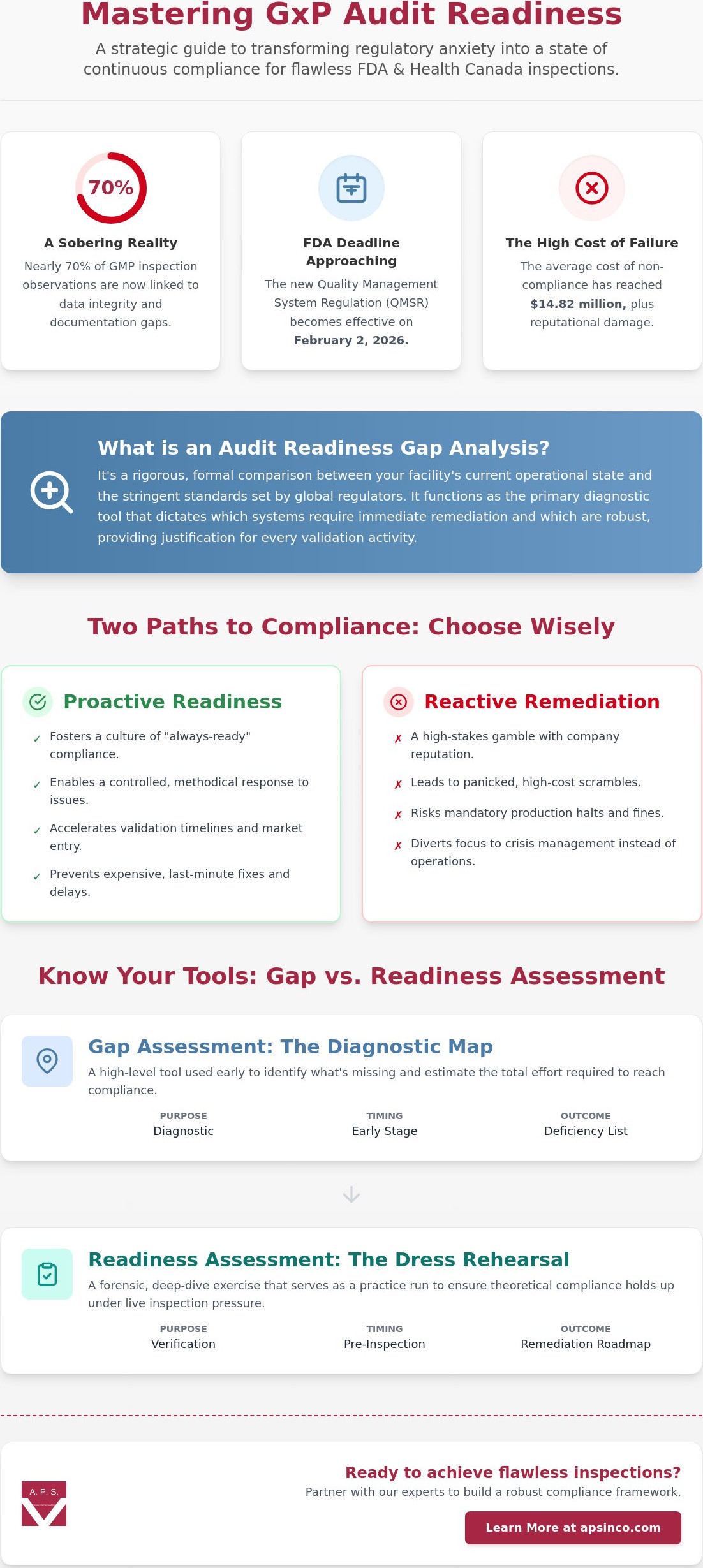
Did you know that nearly 70% of GMP inspection observations are now linked to data integrity and documentation gaps? It's a sobering reality for life sciences leaders facing the pressure of the US FDA's Quality Management System Regulation (QMSR), which became effective on February 2, 2026. If you're feeling the weight of overwhelming data requirements or worrying that a hidden deficiency might lead to a 483 or a warning letter, you aren't alone. Most teams struggle to maintain a constant state of vigilance while managing daily operations. Conducting a thorough audit readiness gap analysis is the only way to transform that anxiety into a controlled, strategic advantage.
We understand that the path to regulatory peace of mind feels steep, especially with the 2026 shift toward governance-driven assurance and ALCOA++ principles. This guide will show you how to master the process of identifying regulatory deficiencies and building a robust remediation roadmap that ensures flawless FDA and Health Canada inspections. You'll learn how to uncover hidden compliance gaps, optimize your validation project timelines, and walk into your next inspection with absolute confidence. Let's move beyond the pre-inspection panic and build a system that stands up to the highest levels of scrutiny.
Table of Contents
What is an Audit Readiness Gap Analysis in GxP Environments?
An audit readiness gap analysis is far more than a simple checklist; it's a rigorous, formal comparison between your facility's current operational state and the stringent standards set by global regulators. By mapping existing workflows against Good Practice (GxP) guidelines, organizations can identify exactly where their quality systems fall short of compliance. In the context of a broader Validation Master Plan (VMP), this analysis functions as the primary diagnostic tool that dictates which systems require immediate remediation and which are already robust. It provides the technical and logical justification for every validation activity you undertake.
The regulatory environment in 2026 has become significantly more complex. With the FDA’s Quality Management System Regulation (QMSR) becoming effective on February 2, 2026, the shift toward governance-driven assurance is now the industry standard. Periodic check-ins are no longer sufficient to maintain systemic integrity. You need a proactive strategy to uncover hidden blind spots before a Health Canada or FDA inspector finds them for you. Identifying these deficiencies early allows for a controlled, methodical response rather than the panicked, high-cost scramble that follows a negative inspection finding.
The Strategic Objectives of a Compliance Assessment
Effective assessments establish a clear baseline for your regulatory maturity. They allow leadership to move beyond guesswork and prioritize financial and human resources where they'll have the most significant impact on risk mitigation. This process transforms abstract regulatory requirements into a concrete list of actionable technical tasks. An audit readiness gap analysis serves as the foundational diagnostic tool that aligns operational reality with stringent regulatory expectations to ensure continuous compliance.
Why Proactive Readiness Trumps Reactive Remediation
Waiting for an inspection to reveal deficiencies is a high-stakes gamble that few life sciences companies can afford. The average cost of non-compliance has reached $14.82 million, and the fallout from a failed audit often includes mandatory production halts and lasting reputational damage. Building a culture of "always-ready" compliance ensures that your team stays focused on core operations rather than crisis management. Beyond risk avoidance, a well-executed gap analysis accelerates overall validation project timelines. When you identify technical requirements and data integrity gaps early in the lifecycle, you prevent the need for expensive, last-minute fixes that delay product launches and market entry.
Gap Assessment vs. Readiness Assessment: Key Differences
Distinguishing between a gap assessment and a readiness assessment is critical for strategic resource allocation. While the terms are often used interchangeably, they serve distinct functions within the compliance lifecycle. A gap assessment is essentially a diagnostic tool. It's used early in the process to identify what's missing and to estimate the total effort required to reach compliance. Think of it as a high-level map that points out the mountains you need to climb. In contrast, a readiness assessment is a forensic, deep-dive exercise. It serves as a dress rehearsal for the real event, ensuring that the theoretical compliance established during your audit readiness gap analysis actually holds up under the pressure of a live inspection.
The outcome expectations for each vary significantly. A gap assessment yields a list of deficiencies and a general timeline, whereas a readiness assessment produces a detailed remediation roadmap and proof of system maturity. Aligning your internal quality framework with the FDA guidance on Quality Systems requires you to understand where these tools fit. If you're unsure which phase your facility currently occupies, our experts in data integrity consulting can help you map out the most efficient path forward.
When to Launch a Gap Assessment
Executing the Readiness Assessment
A successful readiness assessment must mimic the intensity of a real regulatory encounter. This involves simulating the "Front Room / Back Room" dynamic where your subject matter experts are tested on their ability to retrieve GxP records quickly and accurately. We focus on verifying the effectiveness of previous remediation efforts to ensure that once-closed gaps haven't reopened. Speed is a metric of compliance; if an inspector asks for a validation report and your team spends two hours searching for it, you've already signaled a lack of control. Use this simulation to refine your retrieval processes and build the "always-ready" culture your organization needs.
The Anatomy of a GxP Audit Readiness Gap Analysis
A successful audit readiness gap analysis requires a forensic examination of four core pillars: regulatory controls, technical validation, data integrity, and the human element. Unlike generic security audits that focus on broad IT safety, a GxP focused assessment must align every digital and physical action with specific legal mandates. This involves mapping your operational workflows directly against the ISPE GAMP 5 framework and 21 CFR Part 11. It's about ensuring your data isn't just secure; it must be attributable, accurate, and completely transparent to a third-party reviewer.
Technical reviews form the backbone of this process. We evaluate the maturity of your Computer System Validation (CSV) and Equipment Qualification (IQ/OQ/PQ) to ensure your systems perform exactly as intended. Beyond the hardware and software, we audit the "human element" by verifying that training records are contemporaneous and that personnel can articulate their roles during a live inspection. This holistic approach ensures that no single point of failure jeopardizes your compliance status.
Computer System Validation (CSV) Gaps
Legacy systems often represent the most significant risk during a regulatory review. Many laboratories still rely on unvalidated spreadsheets or "Shadow IT" solutions that operate outside the formal quality system. These tools frequently fail to meet the latest GAMP 5 standards for risk based validation. Our specialized computer system validation services help you identify these hidden vulnerabilities and bring your digital infrastructure up to 2026 standards. We focus on accelerating your path to compliance while minimizing operational downtime.
Equipment Qualification (IQ/OQ/PQ) Deficiencies
Incomplete IQ/OQ/PQ documentation is a common trigger for critical observations. During an audit readiness gap analysis, we review the completeness of your qualification records to ensure every instrument is properly installed and operating within its specified limits. We identify missed re-qualification schedules and gaps in calibration logs that could suggest a lack of control. Maintaining a disciplined schedule for instrument maintenance isn't just a requirement; it's a safeguard for your production quality.
Data Integrity and Electronic Records
Data integrity remains the primary focus of FDA and Health Canada inspectors. We evaluate your audit trail reviews and user access controls to ensure that electronic signatures meet 21 CFR Part 11 requirements. Every data point must follow ALCOA+ principles to remain defensible. Utilizing Alleye CMMS software streamlines the capture of maintenance data integrity by providing a validated environment for all equipment logs and calibration events. This level of systemic integrity transforms your records from a liability into a strategic asset.
From Discovery to Action: The Remediation Framework
Identifying deficiencies is only the first half of the journey. The true value of a professional audit readiness gap analysis lies in the transition from discovery to disciplined action. Once you've mapped your "blind spots," you need a structured framework to close those gaps without disrupting your daily production cycles. This phase requires a shift from diagnostic thinking to execution, where every corrective action is documented with the same level of precision expected by an external inspector. A failed remediation is often worse than no remediation at all, as it suggests a lack of institutional control over your quality systems.
Effective remediation follows a logical, five-step progression designed to instill confidence in your stakeholders and regulators alike. We move from risk assessment into formal planning, resource allocation, technical execution, and final verification. This methodical flow ensures that no deficiency is left unaddressed and that every solution is sustainable for the long term. It's about building a robust infrastructure that doesn't just pass the next inspection but maintains systemic integrity for years to come.
Risk-Based Prioritization Strategies
Not all findings carry the same weight. To prevent resource exhaustion, we categorize every gap based on its potential impact on patient safety and product quality. Critical findings represent immediate regulatory risks that could lead to a 483 or a warning letter; these take precedence on the "Critical Path" to readiness. Major findings involve systemic weaknesses in data integrity or validation protocols, while minor findings focus on procedural optimizations. By using data integrity risk assessments to drive your schedule, you ensure that high-stakes vulnerabilities are neutralized first. This targeted approach allows your team to achieve the highest level of protection in the shortest possible timeframe.
Accelerating Remediation with Proven Templates
Documentation is often the biggest bottleneck in the compliance lifecycle. You can reduce documentation time by up to 40% by utilizing standardized GxP templates that have already been vetted against current FDA and Health Canada expectations. These tools provide a consistent structure for your CAPA plans and validation reports, ensuring that your records are "audit-proof" from the start. Specialized consultants play a vital role here, providing the technical expertise needed to close complex technical gaps rapidly. Leveraging PharmaRockIT LIMS further streamlines this process by providing a standardized environment for data management, which eliminates the inconsistencies found in manual or legacy systems.
Success in remediation requires more than just effort; it requires a proven methodology and the right technical tools. If your team is struggling to keep up with the volume of identified gaps, our specialists in data integrity consulting can provide the roadmap and hands-on support needed to reach a state of total readiness. Don't let identified deficiencies sit on a shelf; turn them into a strategic advantage today.
Partnering with APS: Your Guide to Flawless Inspections
APS Compliance Consultants Inc. acts as a dedicated partner to streamline your journey toward regulatory excellence. We understand that the pressure of a looming FDA or Health Canada inspection can be paralyzing for even the most seasoned quality teams. Our experts accelerate the audit readiness gap analysis process by applying a risk based lens to your most complex systems. We don't just hand you a list of findings; we provide a collaborative path to remediation that respects your operational constraints and business goals.
We offer a unique synergy of high level consulting and specialized technology. By integrating Alleye CMMS for maintenance records and PharmaRockIT LIMS for laboratory data, we help you build an ecosystem where data integrity is the default setting rather than a manual chore. Our "Innovative Specialist" approach utilizes the latest GAMP 5 and Computer Software Assurance (CSA) methodologies to ensure your validation efforts are both lean and legally defensible. This modern framework allows biotech leaders to focus on innovation while we handle the intricate details of systemic compliance.
Our track record includes helping global biotech organizations navigate the transition to 2026 standards without missing a production beat. In one instance, a professional audit readiness gap analysis revealed hidden deficiencies in a facility's legacy CSV protocols that would have certainly triggered a 483 observation during an FDA review. By implementing our structured remediation framework, the client achieved a flawless inspection outcome and significantly optimized their internal validation project timelines. We turn regulatory burdens into a controlled, strategic advantage.
The APS Methodology: Reliability Meets Agility
Large firms often provide generic templates that don't account for the nuances of your specific laboratory or manufacturing environment. APS Compliance Consultants Inc. provides customized attention that treats your compliance challenges as our own. We believe in empowering your team through thorough knowledge transfer. Our collaborative spirit ensures that your staff feels confident and capable when an inspector asks a difficult question. We don't just fix the system; we strengthen the culture of compliance within your organization.
Next Steps for Your Facility
The best time to identify a compliance gap was six months ago; the second best time is today. Don't wait for a formal inspection notice to begin your preparations. Start by scheduling a preliminary compliance health check to establish your baseline for 2026 requirements. You can also request a demo of Alleye CMMS to see how automated, audit ready maintenance records can eliminate documentation stress. Contact APS Compliance Consultants Inc. today to schedule your professional gap analysis and take the first step toward a flawless regulatory future.
Building a Legacy of Continuous Compliance
Achieving a state of "always-ready" compliance is a strategic choice that separates industry leaders from those vulnerable to market-impacting regulatory action. By moving beyond reactive measures and embracing a formal audit readiness gap analysis, you transform your quality systems into a resilient, defensible asset. We've explored how to map regulatory controls, prioritize risk-based remediation, and execute a roadmap that stands up to the most rigorous scrutiny from global authorities. This proactive approach doesn't just prevent 483s; it builds a foundation for long-term operational excellence.
APS Compliance Consultants Inc. specializes in turning these complex requirements into streamlined, predictable outcomes. With deep expertise in GAMP 5 and 21 CFR Part 11, we help our partners accelerate validation projects by up to 40% while maintaining a proven track record with FDA and Health Canada inspections. Don't leave your next site visit to chance when you can rely on a seasoned guide to navigate the 2026 regulatory landscape. Secure Your Audit Readiness with an APS Compliance Consultants Inc. Gap Analysis and step into your next inspection with absolute certainty. Your commitment to precision deserves a partner who values it as much as you do.
Frequently Asked Questions
What is the difference between a gap analysis and a mock audit?
A gap analysis is a diagnostic exercise that identifies specific deficiencies between your current quality system and regulatory standards. In contrast, a mock audit is a simulated inspection designed to test your team's performance and record retrieval speed under pressure. While the gap analysis focuses on technical compliance, the mock audit evaluates your overall state of readiness and personnel responses.
How long does a typical audit readiness gap analysis take to complete?
A comprehensive audit readiness gap analysis usually takes between two to four weeks to finalize. This duration depends on the size of your facility and the complexity of your digital infrastructure. The process involves a deep dive into your documentation, followed by a series of technical interviews and the delivery of a prioritized remediation roadmap.
Can we perform a gap analysis internally without external consultants?
You can certainly perform an internal assessment, but external consultants bring an objective perspective that's often difficult to maintain from within the organization. Third party experts, such as those from International Associates Limited, identify "blind spots" that internal teams might overlook due to operational familiarity. They also provide up to date insights into the latest FDA and Health Canada inspection trends that internal staff may not track daily.
What are the most common gaps found during a GxP audit?
Common deficiencies often include inadequate audit trail reviews, missing equipment qualification records, and poorly defined user access controls. Many facilities also struggle with "Shadow IT," where unvalidated spreadsheets are used to manage GxP data. These gaps suggest a lack of systemic control and are frequent triggers for regulatory observations and warning letters.
How often should a life sciences company perform a readiness assessment?
Life sciences organizations should conduct a readiness assessment at least once a year to ensure continuous compliance. It's also vital to perform an audit readiness gap analysis whenever you implement a major system upgrade, install new laboratory equipment, or expand into a new regulatory jurisdiction. Regular check-ins prevent minor procedural drifts from becoming major compliance failures.
What documentation is required to prove a gap has been remediated?
Proving remediation requires a closed Corrective and Preventive Action (CAPA) file supported by updated Standard Operating Procedures (SOPs) and verification reports. You must provide a clear paper trail that shows how the deficiency was identified, the specific steps taken to fix it, and the evidence that the solution is effective and sustainable.
Is a gap analysis required for 21 CFR Part 11 compliance?
The regulation doesn't explicitly use the term "gap analysis," but it mandates that electronic systems are validated and maintain high levels of data integrity. In practice, a formal assessment is the only reliable way to ensure your electronic signatures and audit trails meet these requirements. It provides the documented evidence that your digital records are trustworthy and reliable.
How does GAMP 5 influence the gap analysis for computerized systems?
GAMP 5 provides the risk based framework that dictates the scope and depth of your technical assessment. It influences the process by shifting the focus from exhaustive, "one size fits all" testing to a targeted approach based on the system's complexity. This ensures your validation resources are focused on the areas that pose the highest risk to product quality and data integrity.



Comments