

How to use a software validation protocol template for clear test records
Software validation documents that a computerized system consistently performs its intended function and meets defined requirements. A software validation protocol template turns this work into a planned, reviewable record by defining procedures, acceptance criteria, and how to document test results, exceptions, and failures. Tailor the protocol to the system’s intended use and the risks associated with its functions.
For GxP teams, the record matters as much as the test: reviewers need to trace each requirement through the test performed, evidence collected, and final disposition. Deciding how much detail to include can be challenging, particularly when software connects with equipment, processes, or regulated records. This guide covers how to define scope and responsibilities, write repeatable procedures, set objective pass/fail criteria, and document results and deviations. Use it to structure records that support data integrity, informed review, and audit readiness.
Table of Contents
What is software validation?
Software validation documents whether a system performs its intended function and supports its intended use. Build the protocol around lifecycle risks, documented requirements, and evidence that supports a clear quality decision.
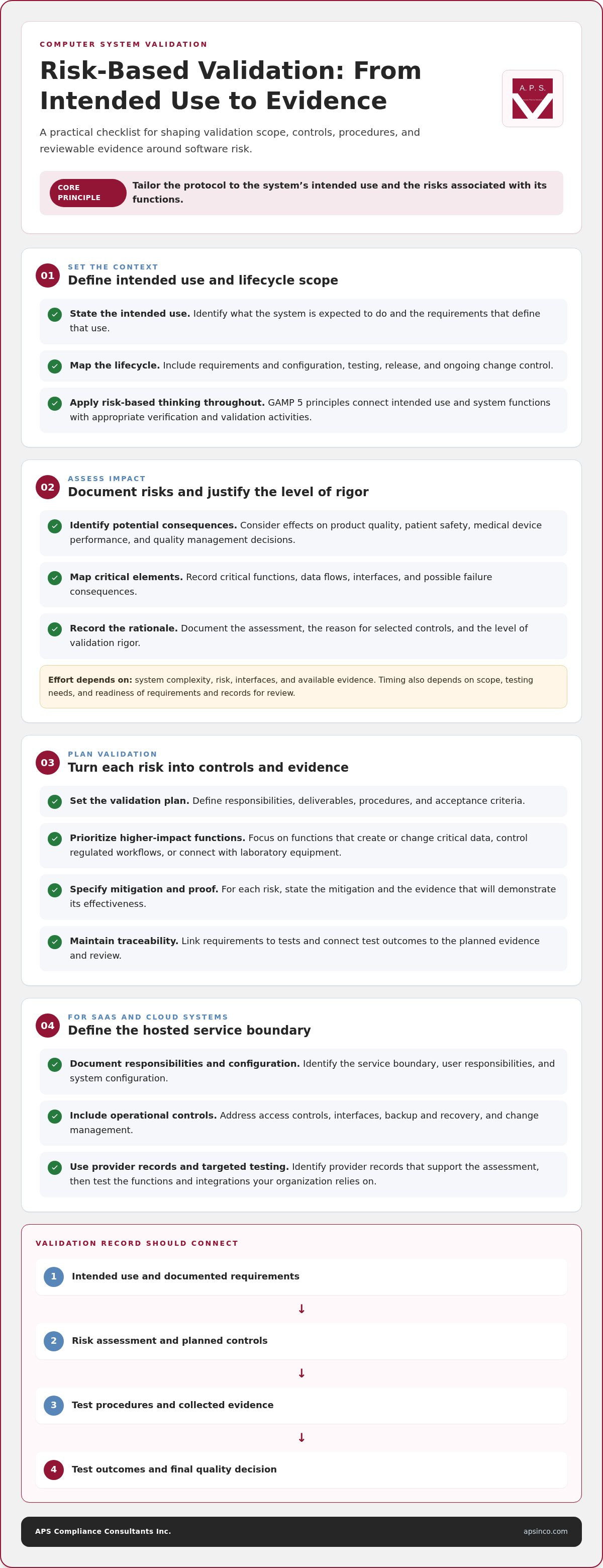
Apply the GAMP 5 Risk-Based ApproachMap the system lifecycle, from requirements and configuration through testing, release, and ongoing change control. According to the European Commission, EU GMP Annex 11 Clause 1 requires a risk-based approach throughout the computerized system lifecycle. Use GAMP 5 principles to connect intended use and system functions with appropriate verification and validation activities. Avoid treating a completed test as proof of continued control.A free Word or Excel template can provide a starting structure, but adapt every protocol to the system’s intended use and risks.
Document Software Risk LevelsDocument how the software could affect product quality, patient safety, medical device performance, or quality management decisions. Identify critical functions, data flows, interfaces, and potential failure consequences. Record the assessment, the rationale for controls, and the selected level of rigor, linking it to planned evidence and review activities.Work effort depends on system complexity, risk, interfaces, and available evidence. The timeline also depends on the scope, testing needs, and readiness of requirements and records for review.
Plan Risk-Based ValidationTranslate the assessment into a validation plan that defines responsibilities, deliverables, procedures, and acceptance criteria. Prioritize functions that create or change critical data, control regulated workflows, or connect with laboratory equipment. For each risk, specify a mitigation and the evidence that will demonstrate its effectiveness. Maintain traceability from requirements to tests and outcomes.For SaaS and cloud systems, define the hosted service boundary, user responsibilities, configuration, access controls, interfaces, backup and recovery, and change management. Identify provider records that support your assessment, then test the functions and integrations your organization relies on.
Documenting test results and failures
Create a record that lets reviewers trace each test from its approved procedure to its final disposition. Document successful outcomes as well as problems: a pass alone does not explain what the tester observed.
Keep the protocol distinct from the validation plan. The plan sets the overall validation strategy, scope, responsibilities, and deliverables. The protocol provides the instructions and criteria for executing specific tests. Make their relationship clear so each protocol test contributes to the planned evidence.
Include the information needed to identify and reproduce each test. Record the change identifier, software name and revision, tester, execution date, and test conditions. For every test case, document the procedure, expected output, actual result, and pass or fail status. Specify the test environment and relevant data so another qualified person can understand what was executed.
Record results as they occur, describing observed behavior plainly, including successes, errors, and failures. Attach supporting evidence, such as a system message or data output, when it clarifies the result. Screenshots can support the record, but standards do not strictly require them. Identify each attachment’s test case, and do not let it replace a clear written result.
Treat a failure as a controlled exception, not a silent edit. Record the failed step, expected and actual behavior, impact assessment, investigation, correction, and approved disposition. After rework or a test-procedure correction, rerun the affected test and document the new result. Preserve the original failure and link the retest evidence to it.
For medical devices, align documentation with the software's intended regulatory use. The procedure content was updated to reflect the 2023 FDA guidance for premarket software documentation. Define which records support the device software evidence package, then maintain traceability between requirements, tests, and outcomes. If your team needs help structuring computer system validation records, discuss your validation documentation needs.
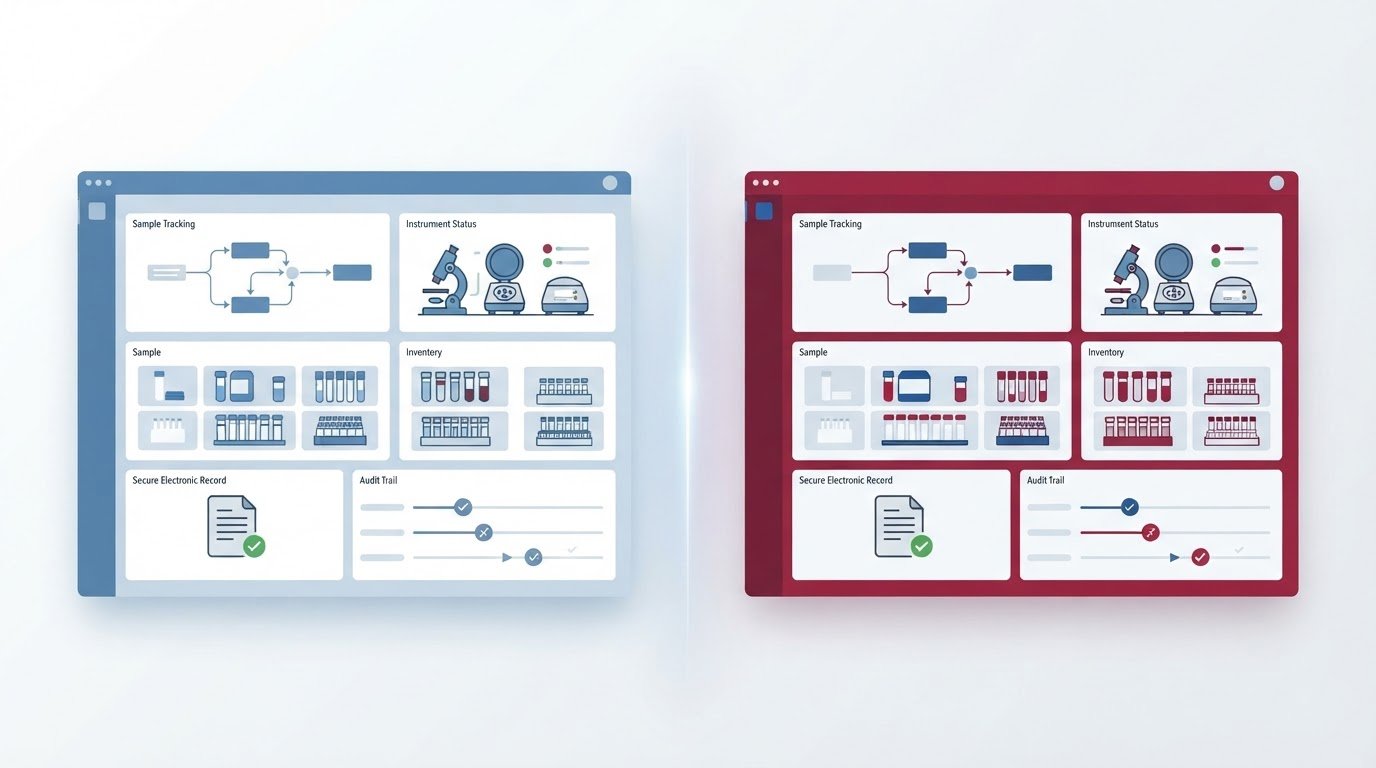
Test result recording and exception handling
Make each exception traceable from discovery through review and closure. A controlled record helps quality reviewers distinguish a test issue from a system defect.
Assign each exception a unique identifier and link it to the protocol, test case, software revision, and execution record. Describe what happened, the expected behavior, and when the issue occurred. For example, identify the specific user role in a failed permission check instead of recording only “access test failed.”
Assess each exception before deciding its disposition. Describe potential effects on intended use, regulated records, data integrity, and other test cases. State whether the issue blocks testing or affects a critical function. Keep the rationale specific: a calculation error that could affect a quality decision differs from a formatting issue with no effect on the result.
Preserve the evidence that explains the event. Link relevant execution logs, system messages, audit-trail entries, and investigation records to the exception identifier. For electronic records, FDA 21 CFR Part 11 Clause 11.10(e) addresses secure, time-stamped, automatically generated audit trails recording user actions. Use those records to establish the sequence of events where applicable.
Document investigation and resolution separately. Identify the likely cause and corrective action, and note whether the protocol or test data changed. If you correct a procedure, retain its revision history and explain why the change preserves the original test intent. Route the disposition through the applicable quality review process before closing the exception.
Link every retest to the original exception and record its execution conditions and outcome without deleting the initial failure. Summarize unresolved items and explain their impact on the validation conclusion. A completed acceptance test plan and results document is reviewed and approved by the Quality Engineer, while the Project Manager maintains a file copy. Close the record only when the evidence supports the disposition and the final status is clear.
Testing procedures and acceptance criteria
Write the protocol by defining scope, test conditions, procedures, and objective pass/fail criteria. Link each test to a requirement and specify the evidence needed to support acceptance.
Define Testing Procedures
Identify each requirement and assign it a traceable reference. The FDA General Principles of Software Validation Paragraph 5.2 calls for clear, testable requirements and traceability through validation evidence. Use that link to show which procedure verifies each requirement, including functions that exchange data with laboratory equipment.
Describe the test environment, prerequisites, responsibilities, test data, and execution sequence. Provide enough detail for another tester to repeat the procedure. For example, specify the user role, input record, action, and expected system response rather than writing “test access control.”
Organize testing by level, such as unit, integration, system, and user acceptance testing. For unit testing, identify significant logic branches, decisions, and calculations that affect outputs. Plan acceptance testing with a tester other than the developer to provide an independent check.
Set Acceptance Criteria
Define a measurable pass condition for every test before execution. Specify the expected output, any permitted tolerance, and what constitutes failure. Avoid subjective wording such as “works correctly”; state the observable behavior that demonstrates the requirement.
Include criteria for records and interfaces when they affect intended use. For example, test whether a report contains the required fields and whether transferred values match the source. ICH Q7 Clause 5.41 requires installation and operational qualification to demonstrate computer hardware and software suitability.
Document the test case log, environment, data, execution responsibilities, procedures, and pass/fail rules in the protocol. Explain how exceptions will be recorded and reviewed, and preserve evidence for every result. Clear criteria help reviewers distinguish an accepted outcome from an unresolved defect.
Need help translating requirements into executable tests and acceptance criteria? Discuss your validation protocol needs.
The template recommends unit, integration, system, and user acceptance testing. Someone other than the developer performs acceptance testing; failures require programming or test-procedure corrections, followed by test reruns.
APS Compliance Consultants: Computer System Validation (CSV)
APS Compliance Consultants Inc. supports pharmaceutical, biotechnology, and medical device teams establishing or strengthening computer system validation. Its CSV services help translate intended use, system risks, and requirements into controlled validation documentation.
In regulated laboratory operations, validation may also cover software connected to maintenance or analytical workflows. APS offers Alleye CMMS Software and PharmaRockIT LIMS, as well as Equipment Qualification (IQ/OQ/PQ) to align equipment evidence with computerized processes. Define scope according to system functions, interfaces, and GxP impact.
Discuss your validation requirements with APS Compliance Consultants Inc.
Keep Validation Evidence Ready for What Comes Next
A protocol should support decisions beyond initial release. As software, workflows, and connected equipment change, keep requirements, test evidence, and quality approvals aligned with the system’s current intended use. Assess whether existing evidence still supports the process instead of relying on documents that no longer reflect operational reality.
A well-maintained software validation protocol template gives your team a clear starting point, but consistent application requires coordinated technical and quality input. APS Compliance Consultants Inc. provides Computer System Validation (CSV), Alleye CMMS Software, and PharmaRockIT LIMS to support regulated software and laboratory operations. Discuss your system and next validation milestone with the team.
Contact APS Compliance Consultants Inc. to discuss your validation needs. With a clear next step, your team can keep building dependable records and informed quality decisions.
Frequently Asked Questions
What are the FDA requirements for software validation documentation?
FDA 21 CFR Part 11 Clause 11.10(a) requires systems used to create, modify, maintain, or transmit electronic records to be validated for accuracy, reliability, and consistent intended performance. FDA General Principles of Software Validation describes lifecycle activities in Section 5. A software validation protocol template can organize supporting records, but it should reflect the system’s intended use and applicable risks rather than impose a universal layout.
What are the GAMP 5 guidelines for software validation protocols?
GAMP 5 supports a risk-based lifecycle approach, with validation activities matched to intended use and software complexity. Software categories help frame the assessment: infrastructure software is Category 1, non-configurable software Category 3, configurable software Category 4, and custom software Category 5. Use a software validation protocol template to connect category rationale with system-specific risks, not as a substitute for assessing the application’s functions.
How to define software validation acceptance criteria and test cases?
Translate every requirement into a test with an observable expected outcome and a clear pass condition. For a calculation function, specify the input conditions, expected result, and how the tester will record the actual output. Include negative cases, such as incomplete input, when the requirement defines a response. Keep each case traceable to its requirement so reviewers can see what the evidence demonstrates.
What risks should a software validation protocol address?
Address risks that could affect safety, regulatory compliance, data integrity, security, or operational capability. For a change, consider its complexity, scope, and developer experience when assessing the likelihood of failure. Then assess the impact if it fails, including financial or reputational effects. For example, an interface change that transfers laboratory results could introduce incorrect or incomplete data into a quality decision.


Comments