

Electronic Record Keeping Compliance: The 2026 GxP Checklist
- 12 minutes ago
- 7 min read
Over 65% of GMP inspection findings in Europe last year were directly linked to gaps in computerized systems and data integrity. This statistic isn't just a warning; it's a reflection of the immense pressure laboratories face as they transition away from legacy paper systems. You likely feel the weight of every manual transcription and the constant worry that a single validation oversight could trigger a costly citation. Achieving robust electronic record keeping compliance shouldn't feel like a high-stakes gamble against evolving regulations like 21 CFR Part 11 or the 2026 EU GMP Annex 11 revisions.
We understand that validating modern cloud-based SaaS systems feels complex, but it's also your fastest route to a secure, paperless environment. This guide provides a definitive 2026 GxP checklist to help you master digital data integrity and significantly reduce your validation timelines. We'll explore the technical controls required for global compliance, the shift toward risk-based Computer Software Assurance, and practical steps to ensure your laboratory remains audit-ready at all times.
Table of Contents
The Evolution of Electronic Record Keeping Compliance in 2026
Electronic record keeping compliance represents the rigorous adherence to regulations that govern how digital GxP data is created, maintained, and safely archived. It's no longer enough to simply store a scanned PDF on a server. The industry has moved beyond "paper-on-glass" workflows toward fully integrated, automated digital ecosystems where data flows seamlessly from benchtop instruments to centralized repositories. This shift ensures that data isn't just stored, but remains active and verifiable throughout its entire lifecycle.
This evolution is driven by GAMP 5 Second Edition, which prioritizes a risk-based approach to validation. By focusing on critical thinking rather than just documentation, you can streamline your operations while maintaining a defensible audit trail. In 2026, regulatory expectations have shifted toward real-time data acquisition. Manual entry is increasingly viewed as a liability because it introduces human error. Automating this process is essential for remediating data integrity gaps before they surface during a formal inspection.
Why Regulatory Bodies are Targeting Digital Data
Regulators like Health Canada and the FDA are intensifying their focus on data sovereignty. They now require clear visibility into where data resides, often mandating local residency for sensitive GxP records. The cost of failing these standards is steep. You face more than just warning letters; non-compliance can lead to product recalls or the total loss of manufacturing licenses. Protecting your data residency is now a core component of your operational security and long-term viability.
ALCOA+ Principles as the Compliance Foundation
Foundational data integrity rests on the ALCOA+ principles. These include being Attributable, Legible, Contemporaneous, Original, and Accurate, supplemented by Complete, Consistent, Enduring, and Available. These standards ensure every record tells a reliable and transparent story. ALCOA+ serves as the universal litmus test to determine if an electronic system is capable of maintaining the absolute integrity required for regulatory approval.
Technical Requirements for 21 CFR Part 11 Compliance
Technical controls are the functional backbone of a defensible digital strategy. To achieve true electronic record keeping compliance, your systems must enforce strict access protocols. This requires moving beyond simple passwords toward role-based authentication paired with mandatory multi-factor authentication (MFA). These layers ensure that only qualified personnel interact with GxP data, creating a secure perimeter around your laboratory assets.
Audit trails must function as non-modifiable chronological records. Every interaction with a data point must be timestamped and attributable to a specific individual. It's not enough to just record a change; the system must capture the original value, the new value, and the reason for the edit. Electronic signatures must also be inextricably linked to their respective records, ensuring they remain legally binding and tamper-evident throughout the data lifecycle.
Managing Audit Trails and Data Attribution
Modern compliance mandates re-authentication for critical actions, such as approving a batch record or modifying a master formula. We utilize the proprietary DTALE engine for hierarchical event dependency tracking. This allows you to visualize how specific events impact others during a root cause investigation. This level of forensic detail transforms a standard log into a proactive tool for maintaining systemic integrity and accelerating audit responses.
Validation and Computer Software Assurance (CSA)
Software labeled as "Part 11 compliant" is only a starting point. The system only achieves a compliant state after it's validated within your unique operational context. We guide laboratories as they move from document-heavy CSV toward risk-focused computer system validation services. By adopting Computer Software Assurance (CSA), you can focus testing on high-risk features, often reducing validation effort from 35% to 15%. If you want to streamline your IQ/OQ/PQ protocols, you can discuss your project with our consultants.
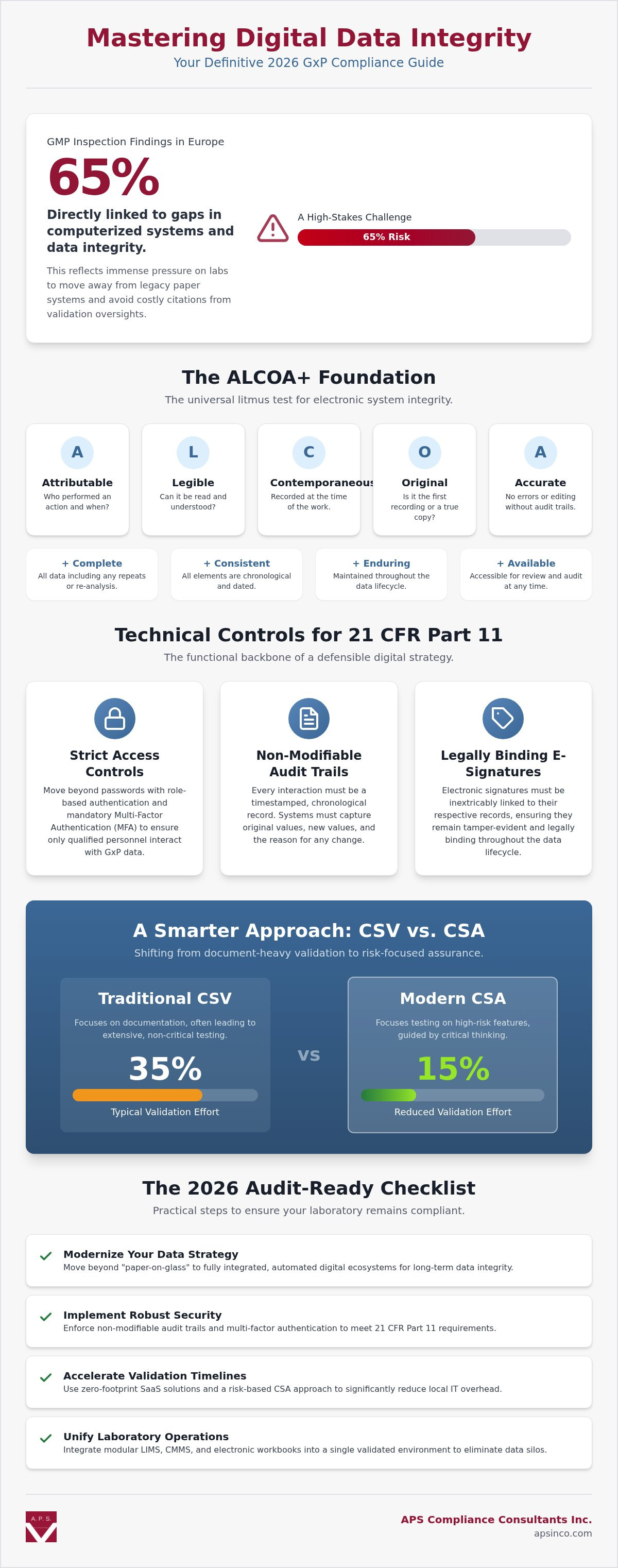
The 2026 Electronic Record Keeping Compliance Checklist
Moving from theory to practice requires a methodical evaluation of your digital landscape. Achieving electronic record keeping compliance starts with a comprehensive inventory of every system that touches GxP data. You must evaluate your SaaS providers against SOC2, HIPAA, and GAMP 5 standards to ensure they meet the rigorous demands of 2026. Data residency is equally critical. Canadian firms should verify that their data is hosted in compliant regions like AWS Canada Central in Montreal or Calgary to satisfy local sovereignty requirements.
Before implementing new modules, execute a data integrity risk assessment gmp. This identifies hidden gaps in your current workflows and provides a clear roadmap for remediation. It's the most effective way to transition from a reactive posture to a state of permanent audit readiness. By identifying vulnerabilities early, you can focus your validation resources where they're needed most.
System Governance and Administration
Establish a centralized "cockpit" for user management and workflow orchestration to eliminate fragmented administration. This hub allows you to define and enforce retention periods based on both regulatory mandates and long-term business value. Clear governance ensures that data remains accessible and secure throughout its entire lifecycle, preventing the data silos that often lead to inspection findings.
Instrument and Benchtop Data Integration
Manual transcription is a major source of data integrity citations. You can eliminate this risk by connecting benchtop instruments directly to your digital ecosystem via RS232 or API. When digitizing existing paper records, ensure you have a "True Copy" certification process in place to maintain the record's original context and validity. If you need assistance building a compliant integration strategy, contact our validation experts today.
Modernizing with a Validated Digital Ecosystem
A "zero-footprint" SaaS model allows you to offload the heavy lifting of infrastructure maintenance while strictly adhering to 21 cfr part 11 requirements. You don't need extensive local IT support to manage server hardware or database backups. Instead, you gain a streamlined environment where compliance is built into the architecture from day one. This approach ensures your electronic record keeping compliance remains intact without the burden of maintaining on-site servers.
System silos are the enemy of data integrity. We recommend a modular implementation where PharmaRockIT LIMS, Alleye CMMS, and your electronic workbooks are integrated into a single source of truth. For older benchtop instruments that lack native networking, the PharmaRockIT LINK acts as a critical bridge. It captures data directly from legacy equipment via RS232 or other interfaces, ensuring every record is captured contemporaneously and eliminating the risks associated with manual data entry.
SaaS vs. On-Premises Compliance
Choosing a SaaS model over on-premises installations significantly reduces your validation burden. Because the base platform is pre-validated by the vendor, your specific validation effort can drop from 35% of the project timeline to just 15%. This model also provides 24/7 global support and automatic security patching. You stay ahead of emerging threats and regulatory changes without diverting your internal team from their core laboratory operations.
Future-Proofing Your Compliance Strategy
Your digital ecosystem should be designed to grow with your organization. Modern systems now utilize AI-supported specification blocks that minimize manual entry errors and flag inconsistencies in real time. This scalability allows you to start with a single laboratory and expand to a multi-site organization under a standardized governance model. Engaging specialized data integrity consulting pharma can accelerate these project timelines by up to 40%, helping you achieve a fully paperless, audit-ready state faster than traditional methods allow.
Securing Your Audit-Ready Future
Transitioning to a fully paperless laboratory is no longer a luxury; it's a regulatory mandate for 2026. By integrating technical controls like multi-factor authentication and non-modifiable audit trails, you transform compliance from a burden into a competitive advantage. Mastering electronic record keeping compliance requires a shift toward risk-based validation and automated data acquisition. These steps protect your manufacturing licenses and ensure that every data point remains attributable and secure throughout its entire lifecycle.
As your trusted local GMP digitalization partner, we're here to guide you through this transition. Our bilingual team, based in the Greater Montreal Area, specializes in helping laboratories navigate the complexities of GAMP 5 and 21 CFR Part 11. We provide the expertise needed to accelerate validation projects by up to 40%, allowing you to focus on your core scientific operations. Accelerate your digital transformation with APS Compliance Consultants Inc. We're ready to help you build a more efficient, secure, and compliant laboratory environment.
Frequently Asked Questions
What is the difference between an electronic record and an electronic signature?
An electronic record is any digital combination of text, graphics, or data maintained by a computer system. An electronic signature is the digital equivalent of a handwritten signature used to authenticate those records. Under 21 CFR Part 11, the signature must be inextricably linked to the record. This ensures the signer's identity is verified and the record's content remains unchanged after the approval occurs.
Is cloud storage compliant for pharmaceutical electronic records?
Yes, cloud storage is compliant provided the vendor and infrastructure meet GxP standards. For electronic record keeping compliance in 2026, you must verify data residency and use validated SaaS platforms. Canadian firms often utilize AWS Canada Central to meet local sovereignty requirements. Compliance depends on the vendor's SOC2 alignment and your ability to validate the system within your specific operational environment.
What are the common findings in a data integrity audit?
Common findings include shared user accounts, disabled audit trails, and data deletion without justification. Auditors frequently flag "orphan data" where results aren't recorded in the official system. These gaps often stem from a lack of restricted access controls or failure to record data contemporaneously. These issues are high-risk areas that trigger significant regulatory citations during inspections and can lead to product recalls or manufacturing license suspensions.
How does GAMP 5 relate to electronic record keeping?
GAMP 5 provides the risk-based framework for validating the computerized systems that manage your digital data. It emphasizes critical thinking over document-heavy processes, aligning with the FDA's Computer Software Assurance guidance. By following GAMP 5, you ensure that your electronic record keeping compliance strategy focuses on the features most likely to impact patient safety and product quality, rather than wasting resources on low-risk functions.
Can legacy laboratory instruments be made 21 CFR Part 11 compliant?
Yes, legacy instruments can achieve compliance through specialized integration tools like PharmaRockIT LINK. These bridges capture data directly from the instrument's RS232 or output ports and transmit it to a validated database. This eliminates manual transcription and creates a secure, attributable audit trail. It's a cost-effective way to modernize your lab without replacing expensive hardware that still provides accurate analytical results.


Comments