

LabX Data System Validation: A Practical GxP Guide
A defensible LabX validation starts with intended use, not a generic template. LabX data system validation should reflect how your configured system supports GxP workflows, handles electronic records, and connects with laboratory procedures and interfaces. If validation evidence does not match actual use, important risks may go unaddressed.
Define the scope by documenting LabX’s intended use, assessing risk, and identifying applicable regulatory expectations. Then connect the scope to requirements, testing, and records that reflect your laboratory’s workflows. This guide explains how to plan a risk-based approach, execute testing, and maintain the validated state as configurations or processes change. APS provides turnkey LabX validation support, collaborating with your team to align documentation and testing with laboratory operations. Typical deliverables include Validation Plans, Risk Assessments, IQ/OQ documentation, and Traceability Matrices.
Table of Contents
What LabX data system validation needs to establish
Definition: LabX data system validation is documented evidence that the configured system consistently performs its intended GxP functions. Its scope and testing are based on risk, data impact, and how the laboratory actually uses the system.
Computer system validation connects what a system is expected to do with evidence that it does so consistently. For LabX, that evidence should address the configuration used in your laboratory, rather than rely solely on vendor documentation or a generic template. Supplier materials can inform the work, but your procedures, workflows, and intended use determine which requirements and risks need assessment.
How intended use determines validation scope
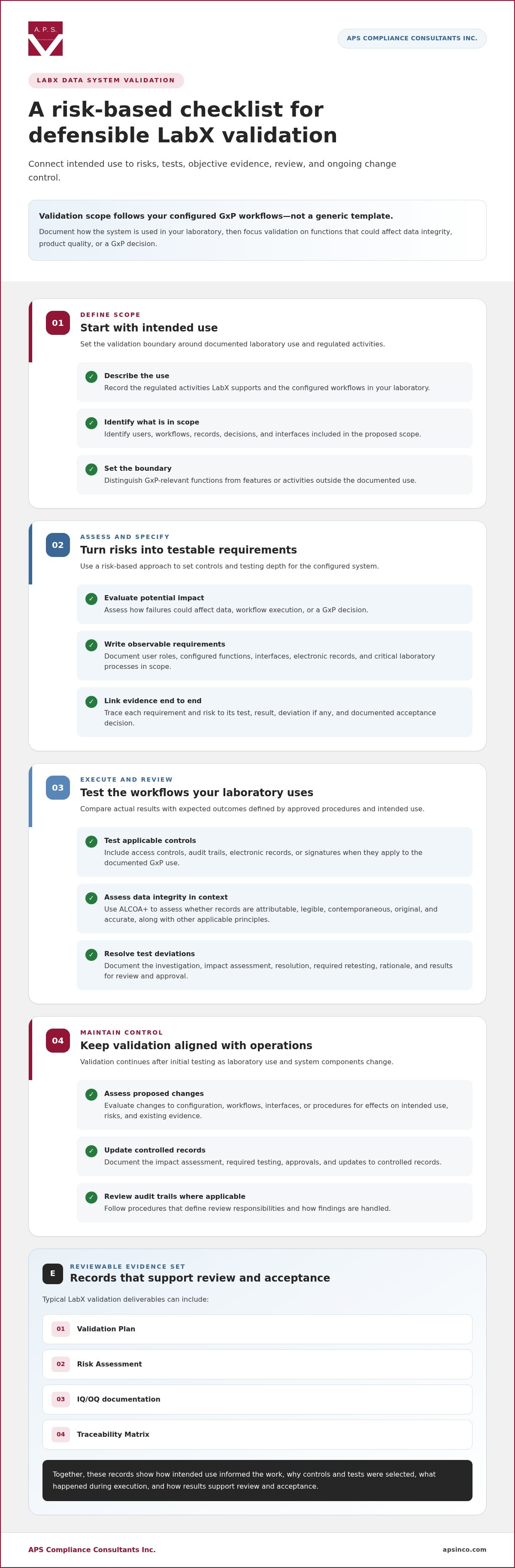
Start by documenting the regulated activities supported by LabX. Identify the users, workflows, records, decisions, and interfaces included in the proposed scope. Then distinguish GxP-relevant functions from features or activities outside that documented use. This boundary focuses validation on functions that could affect data integrity, product quality, or a GxP decision, without assuming every deployment has the same scope.
What validation is designed to demonstrate
Connect each relevant requirement and risk to planned testing and objective evidence. The Good Automated Manufacturing Practice (GAMP) framework provides a risk-based method for shaping validation activities. A Validation Plan, Risk Assessment, IQ/OQ documentation, and Traceability Matrix can show how intended use informed the work and how the results support review and acceptance.
Validation continues after initial testing. Maintain the validated state as workflows, configurations, procedures, or connected systems change. Assess each change for its potential effect on intended use and data, then determine whether updated testing or documentation is needed. This lifecycle approach keeps evidence relevant to ongoing laboratory operations and audit readiness.
Build a risk-based LabX validation strategy with traceable evidence
A practical strategy turns intended use into a controlled sequence: define the use, assess risks, specify controls, test requirements, review evidence, and approve the outcome. A risk-based approach prioritizes validation effort according to potential impact and how LabX is configured in your laboratory. Consider data integrity and GxP decisions when determining which requirements need deeper testing. The FDA guidance on data integrity offers context for assessing data practices. Apply regulatory expectations according to intended use and jurisdiction.
Translate system risks into testable requirements
Document the user roles, configured functions, interfaces, electronic records, and critical laboratory processes within scope. Assess how failures could affect data, workflow execution, or a GxP decision, then define controls and test depth to address those risks. Write requirements as observable outcomes. This allows testing to establish whether the configured system behaves as intended, rather than merely confirm that a test was performed.
Traceability connects each requirement and risk to its test, result, any deviation, and the documented acceptance decision. Reviewers can follow the evidence from intended use through to the outcome.
Assemble a reviewable validation evidence set
APS’s LabX data system turnkey validation can include a Validation Plan, Risk Assessment, IQ/OQ documentation, and Traceability Matrix. These records define the planned work, explain why controls and tests were selected, capture execution evidence, and make gaps visible for resolution before approval. For broader lifecycle context, see the computer system validation services guide.
APS works with your team to align the evidence set with laboratory operations and project scope. The LabX validation support page provides a way to discuss this structured approach.
Test LabX workflows, data integrity controls, and changes
Test documented requirements through the workflows configured for your laboratory. For LabX data system validation, define each test’s expected result from approved procedures and intended use. Do not assume a function is present or testable because a generic template describes it. Include access controls, audit trails, electronic records, or signatures only when they apply to the system’s GxP use and documented scope.
Connect data integrity controls to laboratory operations
Use ALCOA+ as a framework for assessing whether records are attributable, legible, contemporaneous, original, and accurate, along with other applicable data integrity principles. Relate control testing to how staff create, review, correct, and rely on records under laboratory procedures. The FDA guidance on data integrity and compliance provides context for CGMP data practices. Apply relevant expectations according to intended use and jurisdiction.
Record deviations when test results differ from expected outcomes. Document the investigation, impact assessment, resolution, and any required retesting. Retain the rationale and results for review and approval. This makes unresolved issues visible and supports a clear decision on whether the tested workflow meets its requirements.
Manage changes without losing validation control
After release, assess proposed changes to configuration, workflows, interfaces, and procedures for their effect on intended use, risks, and existing evidence. Document the impact assessment, required testing, approvals, and any updates to controlled records. Include periodic audit trail reviews where applicable, following procedures that define review responsibilities and handling of findings. These activities help identify unexpected changes and keep validation status aligned with actual laboratory operations. For related electronic-record controls, see the 21 CFR Part 11 requirements guide.
APS can help your team plan testing and manage evidence for configured LabX workflows. Details are available through the LabX validation support page.
How APS supports turnkey LabX data system validation
APS’s LabX data System Turnkey Validation is shaped around your intended use, system configuration, and project scope. Validation activities and documentation are aligned with how the laboratory operates, so testing addresses relevant workflows and risks rather than following a generic template.
What a collaborative validation engagement covers
APS coordinates planning, risk-based testing, documentation, and review with your validation, QA, QC, laboratory operations, and system stakeholders. This collaboration helps ensure requirements reflect controlled procedures and test evidence is meaningful to the people who use and oversee the workflows. APS applies a GAMP 5 methodology alongside laboratory operational expertise, connecting the validation rationale to practical system use.
Depending on project scope, deliverables can include a Validation Plan, Risk Assessment, IQ/OQ documentation, and Traceability Matrix. These records establish what will be assessed, explain how risks inform testing, capture execution evidence, and support review of results and acceptance. The project scope determines which activities and records apply.
Prepare the information needed to define the project
Gather the materials that describe how LabX is used and controlled at your site. A useful starting set includes:
Documented intended use and system configuration
GxP workflows, user roles, and relevant interfaces
Procedures governing system use, records, and review
Existing requirements, risk assessments, testing records, and supplier documentation
These inputs help APS and your team establish a clear scope, identify evidence gaps, and plan validation activities around operational and data integrity risks. Project information and contact details are available at APS contact.
Set LabX validation up for lasting compliance
Effective LabX data system validation aligns evidence with intended use, configured workflows, and the risks those workflows present. A risk-based plan focuses testing where it matters, while traceability connects requirements, test results, deviations, and approvals in a reviewable record. Maintaining that evidence as configurations and processes change helps keep the validated state relevant to laboratory operations.
APS provides LabX data System Turnkey Validation shaped around your project scope. Deliverables can include Validation Plans, Risk Assessments, IQ/OQ documentation, and Traceability Matrices. APS works with your team to connect validation activities to real GxP workflows and data integrity controls.
To define a practical validation path for your laboratory, contact APS to discuss your LabX data system validation requirements. Clear scope, risk-based testing, and organized evidence help your team support compliance and audit readiness.
Frequently Asked Questions
Is LabX data system validation required for every laboratory?
Not every laboratory has the same validation scope. Assess whether LabX supports GxP activities or records, which processes it affects, and what applicable regulations and quality-system procedures expect. Document the rationale for your decision and define appropriate controls. A laboratory using LabX for regulated records may have different validation needs from one whose documented intended use excludes those activities.
What documents are included in LabX validation?
The project scope determines the documentation set. APS validation deliverables can include a Validation Plan, Risk Assessment, IQ/OQ documentation, and Traceability Matrix. These records can connect intended use and requirements to identified risks, testing, results, deviations, and approval. Establish the scope and rationale before finalizing the evidence set, since documents and tests may differ by configuration.
How do you validate LabX data integrity?
Begin by identifying the records, workflows, users, and decisions within LabX’s intended GxP use. Assess relevant risks and evaluate applicable access controls, audit trails, electronic records, and procedures against that scope. Use ALCOA+ principles to guide the review of data practices, then document how testing and controls address identified risks in the configured system. LabX data system validation should produce evidence that supports review.
Does LabX validation need to be repeated after a system change?
Not automatically in full. Assess each change for its effect on intended use, configuration, workflows, interfaces, and established controls. Document the impact assessment and determine risk-based testing, review, and approval activities. For example, a workflow change may affect different requirements than a procedure update. The assessment rationale and resulting evidence should show how the validated state remains supported after implementation.
How does GAMP 5 support LabX validation?
GAMP 5 provides a risk-based approach for planning validation according to intended use and potential risk. For LabX, apply it to the configured workflows, requirements, controls, and evidence relevant to your laboratory. This gives the validation team a structured rationale for selecting activities and test depth. It does not replace site procedures, knowledge of actual system use, or documented review and approval.


Comments