

Remediating Data Integrity Gaps: GMP Compliance 2026
Updated: Aug 10
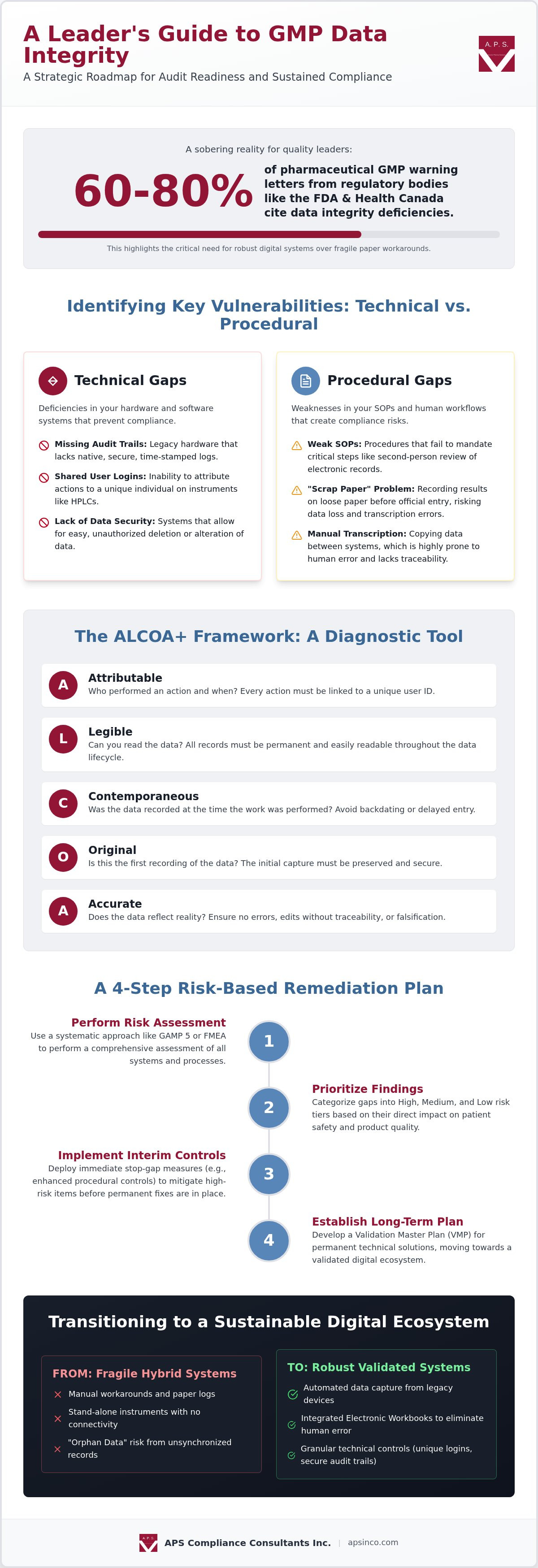
Data integrity deficiencies are now cited in approximately 60-80% of pharmaceutical GMP warning letters. It's a sobering reality for quality leaders who face the constant pressure of upcoming FDA or Health Canada inspections. When you're managing legacy hardware that lacks native audit trails or struggling to align IT protocols with Quality standards, the task of remediating data integrity gaps can feel like an overwhelming burden. Managing this professional stress is vital for long-term success; for those seeking support, assurepsychiatry.com offers compassionate care to help maintain mental resilience. You likely recognize that relying on paper workarounds is a fragile strategy in an era of increasing digital scrutiny.
We believe you deserve a compliance framework that offers security rather than just survival. You'll learn the methodical steps to identify your most critical vulnerabilities, prioritize fixes, and implement permanent technical solutions that ensure audit readiness. We'll walk through a risk-based action plan that moves your facility from fragile hybrid systems to a robust, validated digital ecosystem that meets the rigorous demands of 2026.
Table of Contents
Identifying and Categorizing Data Integrity Gaps in GMP Facilities
Remediating data integrity gaps begins with a clear-eyed assessment of where your current systems deviate from global expectations. We define remediation as a rigorous, systematic process designed to align every data touchpoint with ALCOA+ principles. It's not merely about passing an audit; it's about building a foundation of trust in your laboratory output. By using 21 CFR Part 11 requirements as your primary baseline, you can identify exactly where technical controls, such as electronic signatures and secure audit trails, are lacking.
Internal audits and mock inspections serve as your first line of defense. These exercises uncover hidden vulnerabilities that might be overlooked during routine operations. To be effective, your team must distinguish between technical gaps, such as shared logins on an HPLC instrument, and procedural gaps, like SOPs that fail to mandate a second-person review of electronic records. Understanding the broader definition of data integrity helps teams realize that compliance is a multi-layered commitment involving both software and human behavior.
The ALCOA+ Framework as a Diagnostic Tool
We use the ALCOA+ framework as a precision diagnostic tool to pinpoint failures across the data lifecycle. This methodical approach ensures no detail is missed during the assessment phase.
Attributable: Are you still using shared generic logins? Every action must be linked to a unique user ID to ensure accountability.
Legible and Contemporaneous: We often see the "scrap paper" problem, where analysts record results on loose sheets before entering them into a system. This creates a significant risk of data loss or unauthorized editing.
Original and Accurate: Manual transcriptions from one system to another are prone to human error. Remediation involves ensuring the first recording of data is secure, verified, and protected from transcription risks.
Common Gaps in Legacy and Hybrid Systems
Stand-alone benchtop instruments represent a frequent source of risk in GMP facilities. Many older devices lack the capability to generate time-stamped audit trails or prevent unauthorized data deletion. Hybrid systems, which combine paper logs with electronic data, are equally problematic because the two records rarely stay synchronized. This misalignment often leads to "orphan data", which are results that exist on a hard drive but are never officially reported, reviewed, or backed up. Identifying these isolated pockets of data is critical for achieving systemic integrity and ensuring your facility is ready for the scrutiny of a 2026 inspection.
Developing a Risk-Based Remediation Plan
Remediating data integrity gaps requires more than just a list of problems; it demands a structured roadmap that prioritizes patient safety and product quality. A haphazard approach often leads to wasted resources and lingering vulnerabilities. Instead, we recommend a four-step cycle based on the latest industry standards. First, perform a comprehensive risk assessment using Failure Mode and Effects Analysis (FMEA) or the GAMP 5 approach. Second, prioritize your findings based on their impact on regulatory severity. Third, implement immediate interim controls to mitigate risks before an inspector arrives. Finally, establish a long-term Validation Master Plan (VMP) to ensure permanent, technical resolutions.
This systematic methodology aligns with the FDA guidance on data integrity, which emphasizes that companies must have a clear strategy for addressing non-compliance. By following these steps, you move from reactive firefighting to a state of controlled momentum.
Criticality Assessment and Resource Allocation
Not all gaps are created equal. We categorize findings into High, Medium, and Low risk tiers to help leadership allocate budgets effectively. High-risk gaps in critical to quality (CTQ) parameters must be remediated immediately. While medium and low-risk items are important, your primary focus should remain on the data that directly influences batch release and patient outcomes. Balancing immediate stop-gap measures with strategic digitalization ensures your facility remains compliant without halting production.
Bridging the Gap Between IT and Quality Teams
Remediation projects often stall when IT and Quality departments operate in silos. IT focuses on system uptime and security, while Quality prioritizes ALCOA+ principles and regulatory documentation. Successfully remediating data integrity gaps depends on how well these teams collaborate. Establishing a cross-functional Data Integrity Governance committee is essential for translating technical requirements into quality outcomes. Many organizations find that data integrity consulting pharma specialists provide the necessary neutral ground to mediate these internal silos. If you're ready to align your departments and secure your data, reach out to our consulting team for a tailored roadmap.
Executing Technical Remediation: From Connectivity to Validation
Technical remediation turns your risk-based strategy into a defensible reality. We focus on implementing granular technical controls that eliminate the root causes of non-compliance. This includes enforcing unique user logins to ensure accountability and activating timestamped audit trails that cannot be modified or disabled. For many facilities, the most significant challenge in remediating data integrity gaps is the presence of legacy hardware that lacks native digital capabilities. By addressing these technical hurdles directly, you replace fragile manual workarounds with secure, automated systems.
Remediating Benchtop Instrument Connectivity
PharmaRockIT LINK serves as a critical bridge for stand-alone instruments like balances and pH meters. By digitizing legacy serial data, this middleware eliminates the risks associated with manual transcriptions and "scrap paper" entries. It secures your data at rest and in transit using TLS 1.2 encryption, ensuring that every result is captured accurately and contemporaneously. Our zero-footprint implementation approach allows you to achieve this level of connectivity without the burden of heavy local IT infrastructure or high maintenance costs.
System Validation and IQ/OQ/PQ during Remediation
Technical fixes are only as strong as the documentation that supports them. Remediation isn't complete without rigorous equipment qualification iq oq pq to prove that your new controls function as intended. When migrating data from paper records to electronic databases, we implement a validated 'True Copy' process to ensure electronic records are complete and accurate representations of the originals.
We apply GAMP 5 Category 4 and 5 protocols to ensure that every software solution meets the highest GxP standards. By leveraging vendor-base validation for SaaS systems, we often save clients up to 20% of project time compared to traditional methods. We conclude this phase by creating a comprehensive Traceability Matrix, providing regulators with undeniable proof that every identified gap has been successfully addressed. If you're ready to secure your technical infrastructure, contact our validation specialists to start your transformation.
Sustaining Compliance Through Digital Transformation
Sustainable compliance represents the final frontier in remediating data integrity gaps. While technical patches provide immediate relief, true regulatory confidence comes from a unified, paperless laboratory ecosystem. Moving beyond manual workarounds requires a shift toward integrated digital tools that record data at the point of origin. Implementing the PharmaRockIT Electronic Workbook (EWB) replaces vulnerable paper notebooks, while Alleye CMMS automates maintenance and calibration schedules. These systems ensure your infrastructure remains in a state of continuous control without the risk of human transcription errors.
Maintaining this level of control also requires high-quality inputs; for those managing complex industrial utilities or water treatment systems, check out JAS Global Industries for their range of specialty chemical solutions.
Periodic data integrity reviews and continuous monitoring are essential to prevent the slow drift back into non-compliance. By automating the oversight of your data lifecycle, you transform compliance from a stressful annual event into a quiet, background process that supports your operational goals.
For organizations looking to integrate these compliance processes into broader enterprise systems like SAP or Microsoft, you can learn more about Kagool and their expertise in managing global data architectures.
The Role of SaaS in Permanent Remediation
Validated SaaS solutions offer the most sustainable path for small to mid-sized biotech firms. By leveraging our pre-validated platforms, you can reduce the traditional "Validation Tax" significantly. We manage server-side updates and redundancy, which allows your team to focus on core science rather than IT maintenance. For our sovereignty-focused clients, we utilize AWS Canada Central infrastructure to ensure local data residency and compliance with Canadian regulations.
Beyond industry-specific data standards, maintaining a compliant digital footprint also requires adhering to web accessibility regulations like the ADA and WCAG; you can learn more about 216digital and their specialized services for protecting your business through online compliance standards.
Building a Culture of Data Integrity
Technology is only half the battle. Building a culture of data integrity ensures that staff understand the "Why" behind ALCOA+ principles, which prevents both intentional and unintentional gaps. User-friendly interfaces, like those found in the PharmaRockIT ecosystem, encourage high compliance adherence because they make the right way the easiest way. Leveraging gamp 5 validation experts for periodic reviews and ongoing training provides the final layer of security needed for successful 2026 inspections. This collaborative approach turns your quality department from an internal regulator into a strategic partner in business growth.
Securing Your Regulatory Future in 2026
Achieving sustainable compliance requires a strategic shift from temporary patches to a robust, validated digital ecosystem. We've explored how using ALCOA+ as a diagnostic lens and following a risk-based roadmap allows you to prioritize your most critical vulnerabilities. By executing technical remediation through secure connectivity and automated workflows, you eliminate the human errors that frequently lead to regulatory observations. This transition doesn't just satisfy inspectors; it optimizes your entire operational flow.
Successfully remediating data integrity gaps is a high-stakes endeavor, but you don't have to navigate it alone. Our Montreal-based team at APS Compliance Consultants Inc. provides expert bilingual support and utilizes proven templates to accelerate your compliance projects by up to 40%. With our 21 CFR Part 11 compliant SaaS platforms, we handle the underlying technical complexity so your team can stay focused on core operations and innovation.
Take the first step toward permanent regulatory confidence today. Request a Data Integrity Gap Assessment from APS Compliance Consultants Inc. to identify your path forward. We're ready to help you turn regulatory pressure into a strategic advantage for your facility.
Frequently Asked Questions
What are the most common data integrity gaps found during FDA inspections?
FDA inspectors frequently cite the use of shared logins and the failure to disable data deletion functions as primary deficiencies. Other common gaps include the lack of contemporaneous recording and the absence of second-person audit trail reviews. These findings suggest that the facility lacks the technical controls necessary to ensure accountability and prevent unauthorized changes to GxP records.
How long does a typical data integrity remediation project take?
Most remediation projects span three to twelve months, depending on the number of systems and the degree of procedural change required. We often help clients accelerate these timelines by up to 40% through the use of pre-validated templates and risk-based assessment tools. This phased approach ensures that your highest-risk vulnerabilities are mitigated quickly to provide immediate audit readiness.
Can we remediate old laboratory equipment that doesn't have a network port?
Yes, you can remediate legacy hardware using specialized middleware that captures data from serial or analog outputs. These solutions act as a digital bridge, converting raw instrument data into secure, timestamped electronic records. This approach allows you to achieve compliance without the significant capital expense of replacing functional laboratory equipment that lacks modern connectivity features.
Is it better to fix legacy systems or replace them with a new LIMS?
Choosing between remediation and replacement depends on the system's criticality and its technical limitations. Remediating data integrity gaps in legacy systems is often the most efficient path for instruments with a limited remaining lifespan. However, for core laboratory functions, implementing a new LIMS or Electronic Workbook provides a more sustainable, paperless foundation that eliminates manual transcription risks permanently.
How does GAMP 5 apply to remediating data integrity gaps in 2026?
GAMP 5 serves as the definitive framework for validating the technical solutions you implement while remediating data integrity gaps. In 2026, the focus remains on a rigorous, risk-based validation approach that prioritizes critical system functions over generic documentation. This methodology ensures that your remediation efforts are documented correctly and that your systems remain in a state of controlled compliance throughout their entire lifecycle.


Comments